UNDERSTAND IT VISUALLY
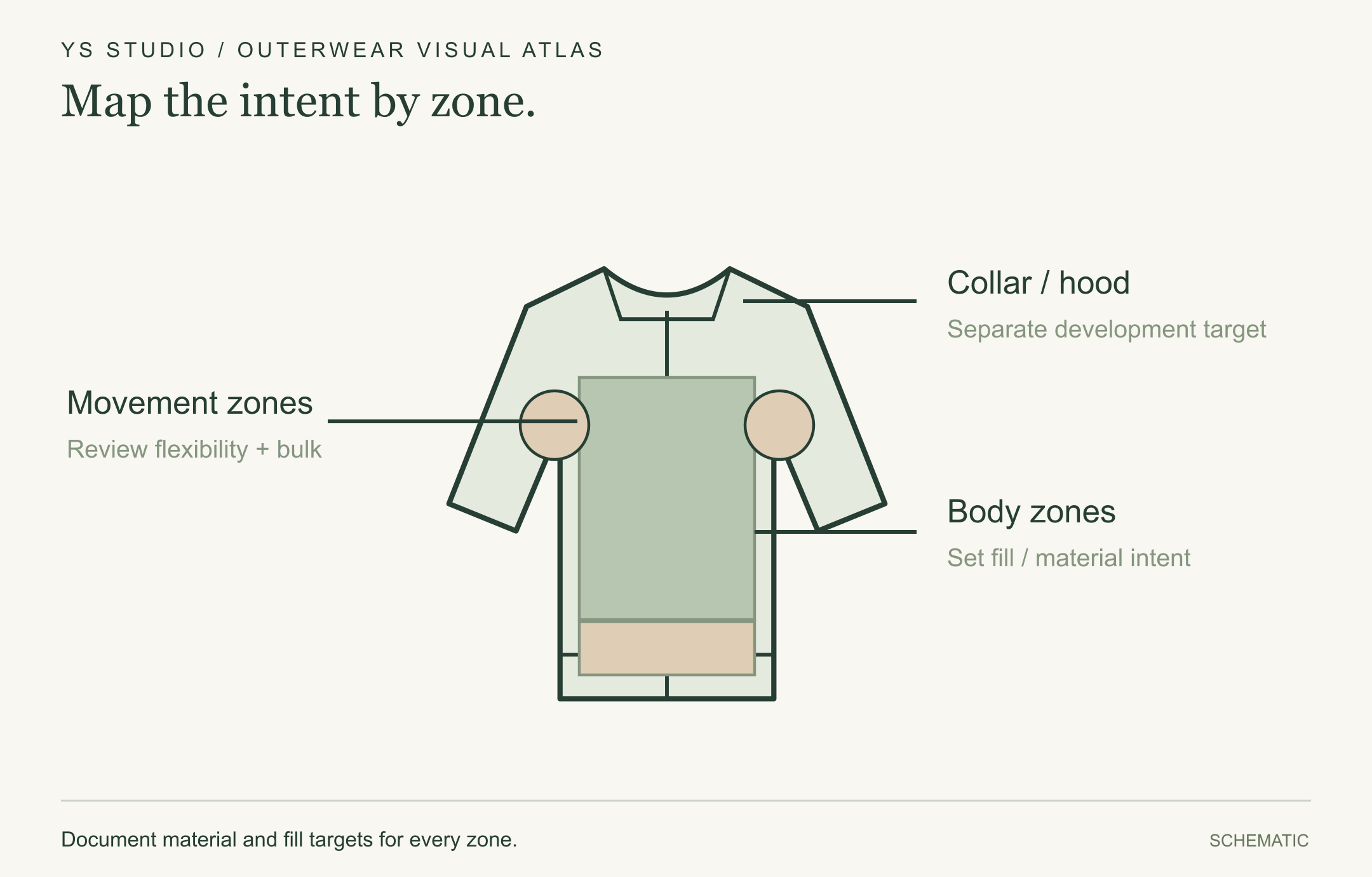
Map the intent by zone.
Body, sleeves, collar and movement zones can have different design needs. Colors identify design zones, not measured temperature.
Document material and fill targets for every zone.
Define the design problem
Ask where the wearer needs warmth, mobility, lower bulk or a particular silhouette. Consider garment length, activity, layering and exposure. Mark zones on a front/back technical sketch.
Translate zones into construction
For each zone, record material, fill target, chamber layout, transition line, seam details and size grading. Pay special attention to shoulder, underarm, elbow, hem and pocket interfaces where movement or assembly changes.
Review the whole garment
Check mobility, visual balance, fill distribution, seam comfort and thermal claims against the intended product. A body map is a development hypothesis; wearer and lab testing can validate specific outcomes.
Questions buyers ask
Can different fill weights be combined in one jacket?
They can be specified by zone when construction and sourcing support it. Document and sample each transition.
Does body mapping prove better warmth?
No. It describes design intent; performance claims need appropriate garment-level evidence.
Sources and further reading
External sources inform the technical explanations above. Standards and test requirements can vary by market; check current documents for your product.
This guide supports early product decisions. Confirm material data, applicable labeling rules and performance claims for the specific product and destination market.