UNDERSTAND IT VISUALLY
The shell changes what you see.
A translucent shell may reveal darker filling. Review the actual shell, fill and lighting together for each colorway.
Appearance approval is separate from species and quality.
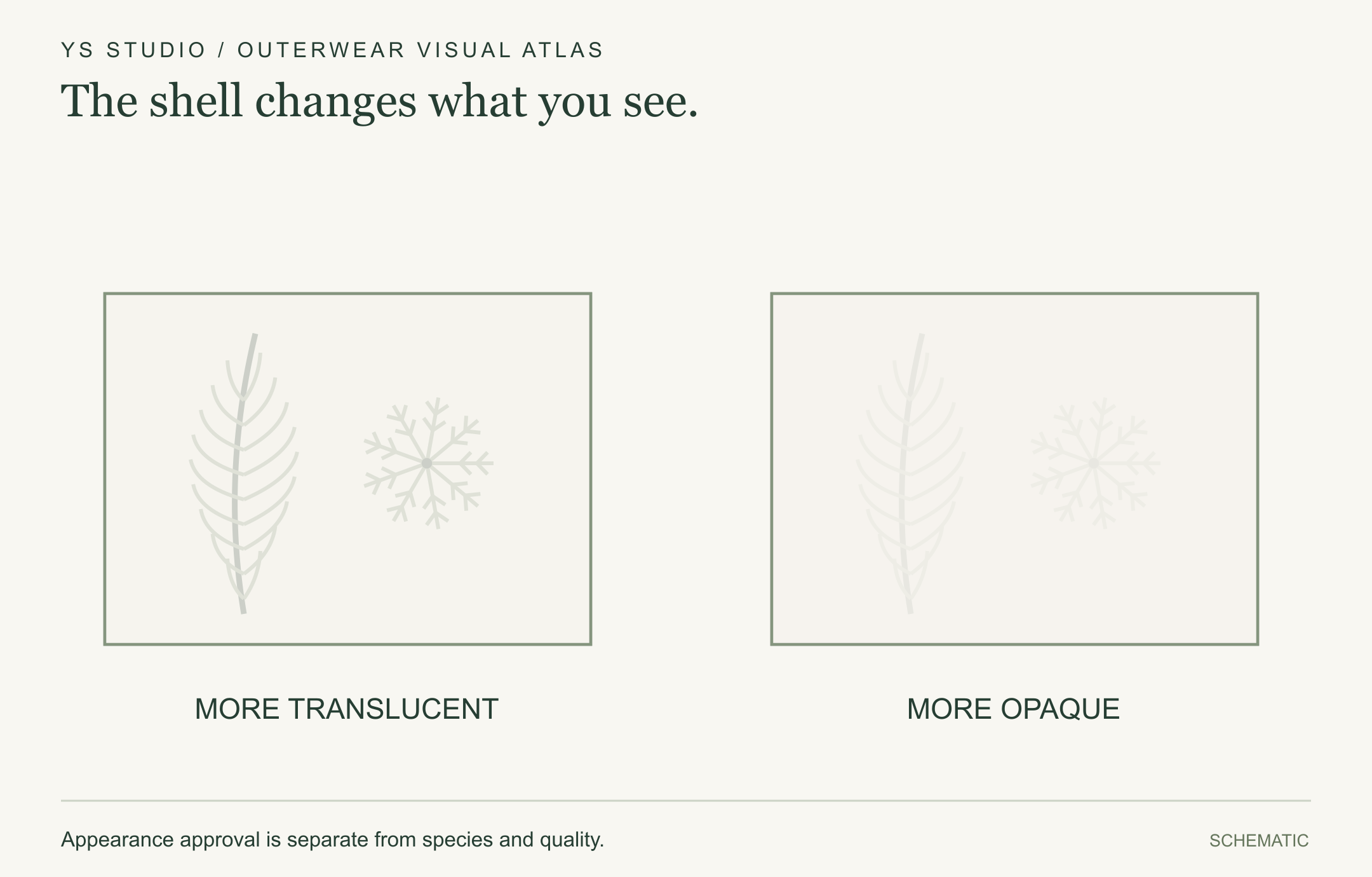
Why color can show through
The shell’s opacity, color, weave, finish and lighting affect whether filling appears through the fabric. Filling color can also vary. A swatch viewed alone may not represent a filled, quilted garment.
Define the acceptance sample
Choose the shell and fill combination, sew a representative filled panel or garment, and review under agreed lighting. Document acceptable shade range and any visual limits for the target colorway.
Treat color and composition separately
A white or grey appearance is not proof of species, cleanliness or insulation performance. Keep the visual approval, material composition evidence and performance testing as separate records.
Questions buyers ask
Can dark down be used under a white shell?
It may be visible depending on shell opacity and construction. Make and approve a representative filled sample.
Does white down mean goose down?
No. Color does not establish species.
Sources and further reading
External sources inform the technical explanations above. Standards and test requirements can vary by market; check current documents for your product.
This guide supports early product decisions. Confirm material data, applicable labeling rules and performance claims for the specific product and destination market.