UNDERSTAND IT VISUALLY
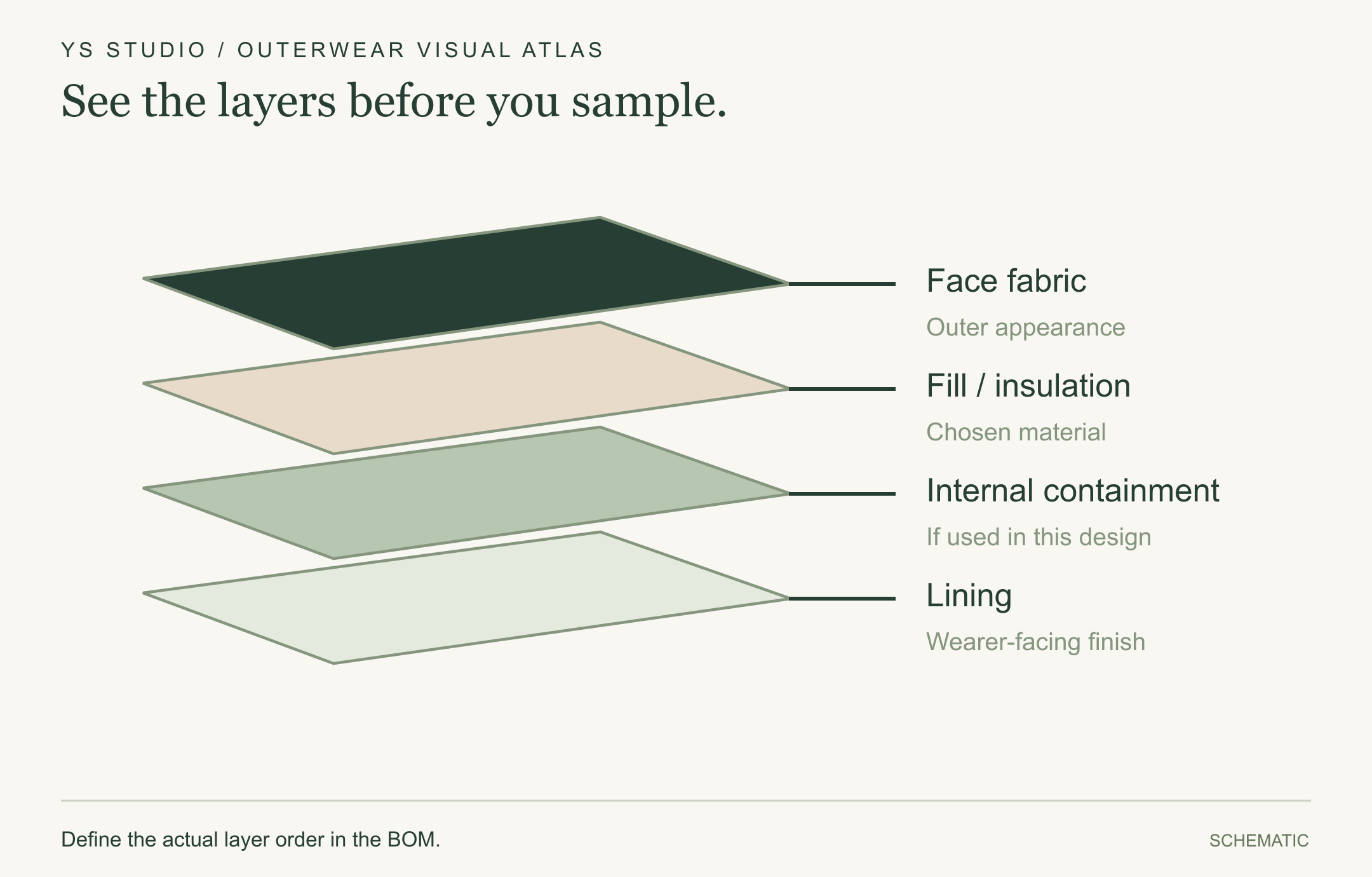
See the layers before you sample.
Identify the face fabric, fill containment and lining. A separate internal down bag is optional and depends on the chosen construction.
Define the actual layer order in the BOM.
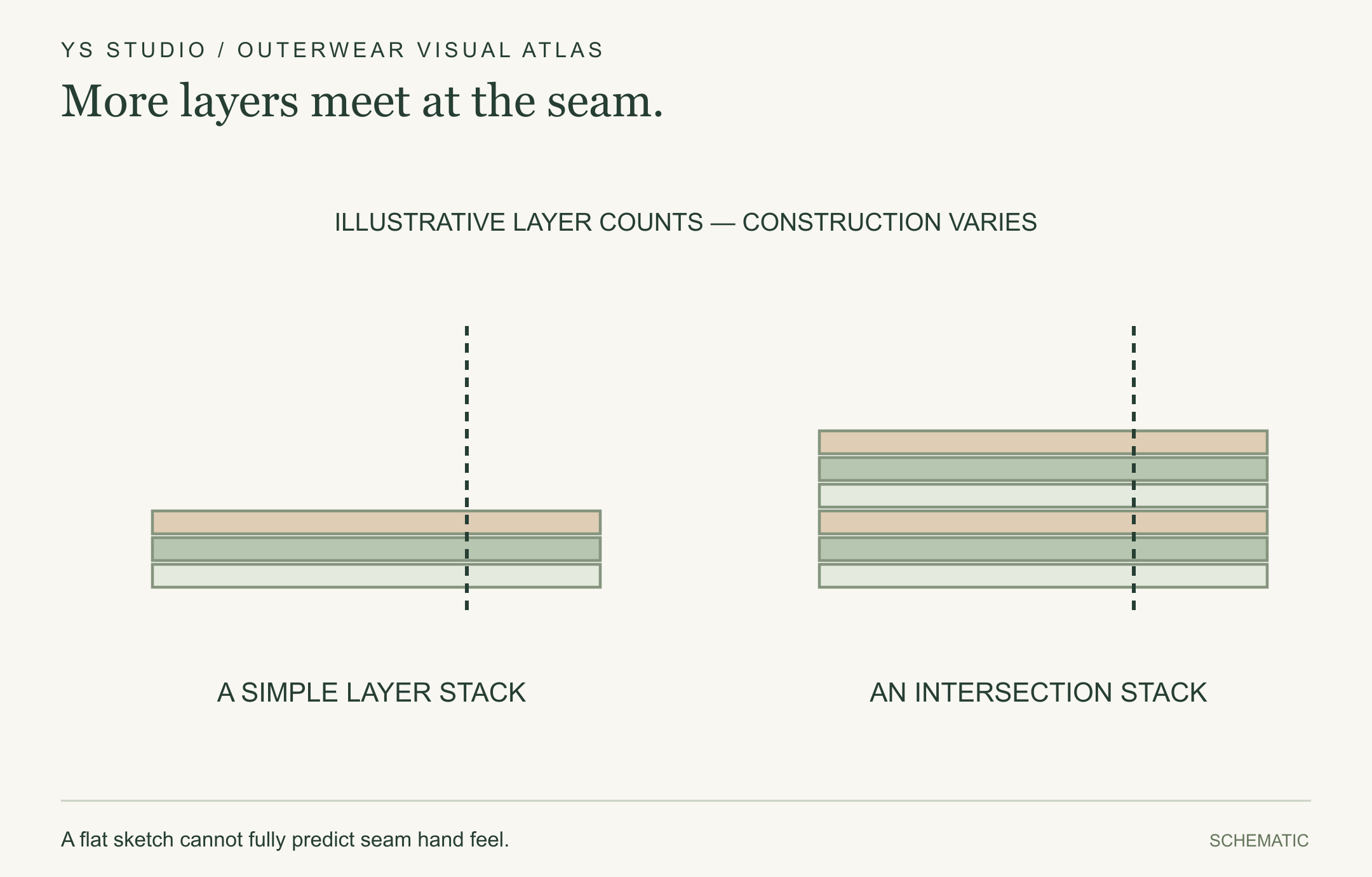
More layers meet at the seam.
Seam intersections can stack shell, lining and insulation. Review actual seam allowance, handling and bulk in the sample.
A flat sketch cannot fully predict seam hand feel.
Give each layer a clear job
The face fabric carries visual, hand-feel and environmental requirements. The lining affects comfort, appearance and movement against clothing. An internal down bag, where used, contains fill and adds another construction interface. Some designs combine roles; do not assume a layer exists from a shorthand name.
Specify the full stack
Record fiber composition, construction, weight, finish, color, supplier reference and test requirements for every layer. Show the layer order on a garment section, and indicate where each layer is stitched, turned or joined.
Validate the assembled garment
The shell, lining, seams and fill interact. Check leakage and durability on the actual construction; fabric-level results alone may not represent finished-garment performance.
Questions buyers ask
Does every down jacket need a separate down bag?
No. Construction varies. Define the containment approach on the product cross-section and validate it.
Is a high thread count enough to prove a fabric is downproof?
No single construction descriptor replaces a relevant downproofness test.
Sources and further reading
External sources inform the technical explanations above. Standards and test requirements can vary by market; check current documents for your product.
This guide supports early product decisions. Confirm material data, applicable labeling rules and performance claims for the specific product and destination market.