UNDERSTAND IT VISUALLY
Fiber ≠ weave.
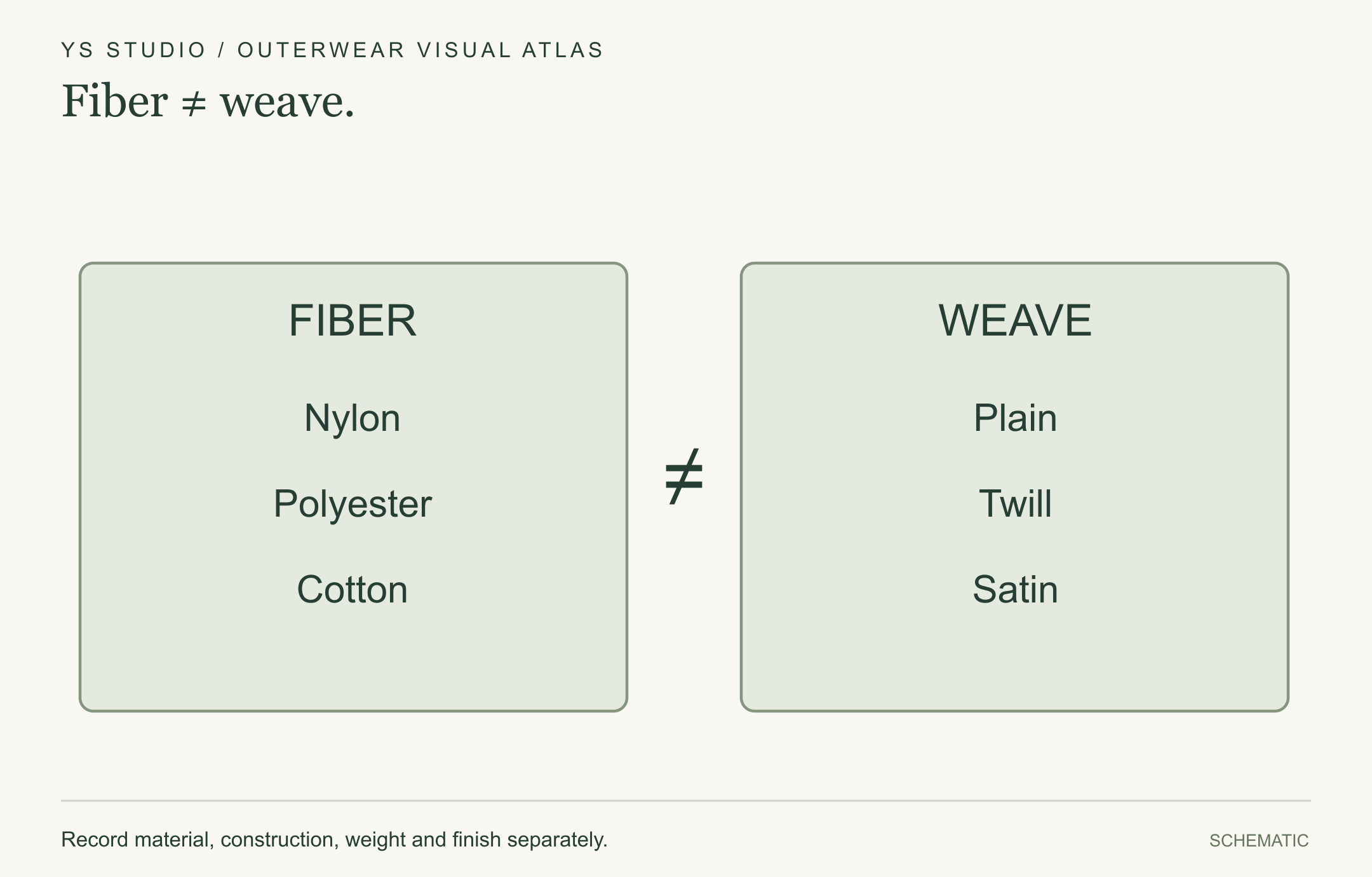
Fiber describes the material; weave describes how warp and weft interlace. Nylon, polyester and cotton belong in a different specification field from plain, twill and satin.
Record material, construction, weight and finish separately.
Start with two separate questions
“What is it made from?” and “How is it constructed?” belong in different fields. A supplier description such as nylon twill gives two pieces of information, but still leaves yarn size, density, weight, finish and performance unspecified.
Move through the material hierarchy
Fiber is made into yarn, yarn becomes fabric, and finishing can change the resulting material. A woven shell, a knitted fleece and a nonwoven insulation sheet use different construction routes. Use “weave” for woven constructions rather than treating every textile as woven.
Build a buyer-ready material record
For every shell candidate, record fiber composition, woven/knitted/nonwoven construction, yarn information when relevant, fabric mass per area, usable width, finish, color reference and supplier article. Keep these details attached to the actual swatch and sample lot.
Use the distinction in a design meeting
A brand may request a smoother hand while keeping the same fiber, or request a different fiber while trying to preserve the same appearance. Document the intended change and compare new swatches. Do not assume that changing a fiber name alone will preserve drape, sound, opacity or sewing behavior.
Questions buyers ask
Is nylon a weave?
No. Nylon identifies a fiber family. A woven nylon shell can use different weave constructions.
Does a weave name prove downproofness?
No. It describes structure; fill retention needs an appropriate specification and test.
Sources and further reading
External sources inform the technical explanations above. Standards and test requirements can vary by market; check current documents for your product.
This guide supports early product decisions. Confirm material data, applicable labeling rules and performance claims for the specific product and destination market.