UNDERSTAND IT VISUALLY
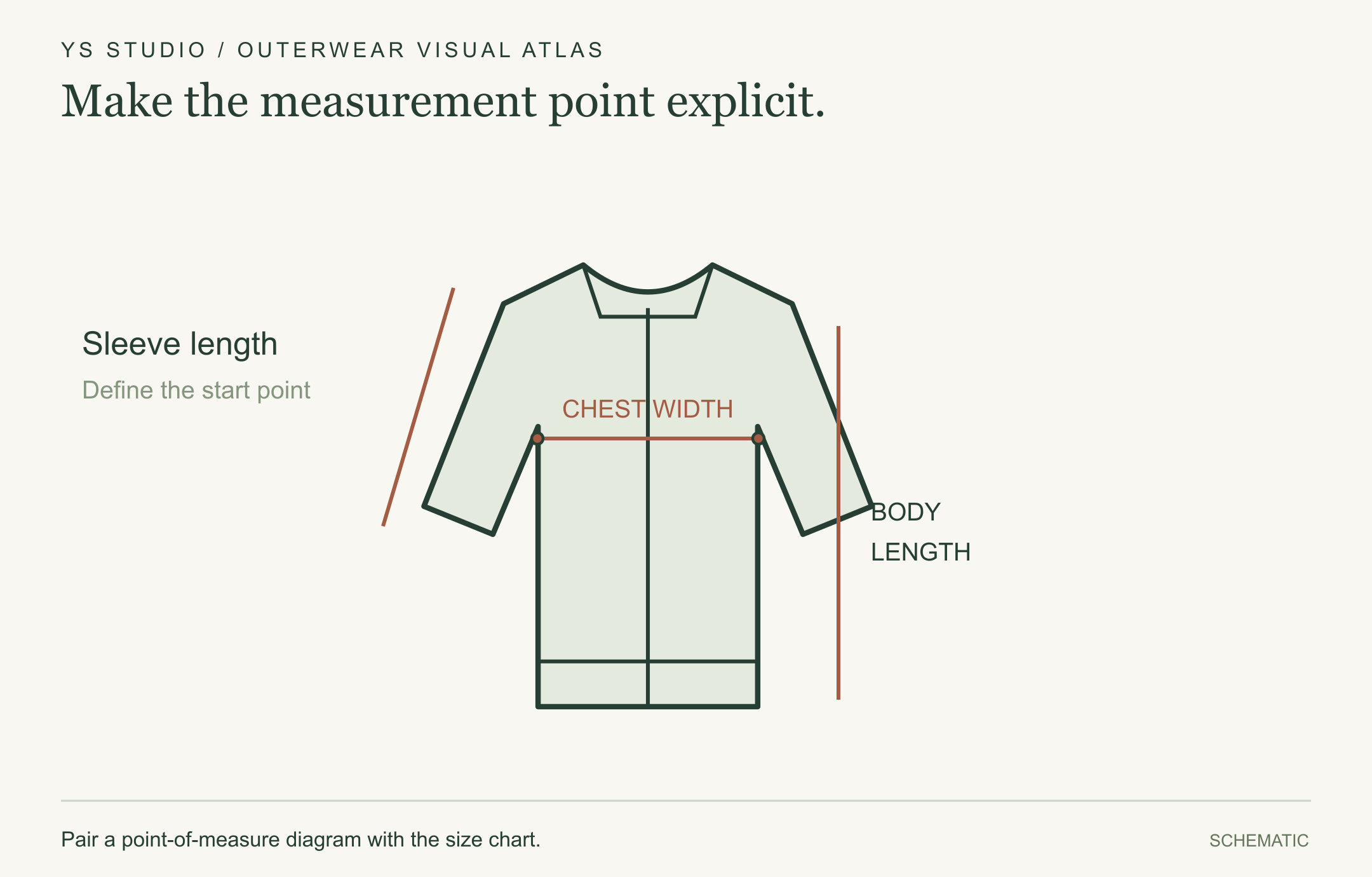
Make the measurement point explicit.
Chest width, body length and sleeve length need defined start/end points and a consistent measuring method.
Pair a point-of-measure diagram with the size chart.
Start with the product intent
Define wearer, market, use, season, target retail/FOB range, quantity, launch timing and visual references. Explain which parts of each reference matter: silhouette, pocket, quilting, fabric hand or mood.
Add buildable instructions
Include front/back flats, points of measurement and grade rules; shell, lining and insulation BOM; fill composition, method and weight; chamber/quilting construction; trim and label details; color standards; packaging and compliance requirements. Mark unknowns as decisions to resolve.
Control approvals
Set sample stages, fit comments, material approvals, test gates, reference size, bulk approval sample, tolerances and change control. The approved sample and written specification should tell the same story.
Questions buyers ask
Can I begin without a complete tech pack?
Yes, a concept, references and commercial brief can start a development discussion. Decisions and specifications still need to be agreed before bulk production.
What is the most important down specification?
There is no single one. Composition, test method, fill power, fill weight, distribution and garment construction all need context.
Sources and further reading
External sources inform the technical explanations above. Standards and test requirements can vary by market; check current documents for your product.
This guide supports early product decisions. Confirm material data, applicable labeling rules and performance claims for the specific product and destination market.