UNDERSTAND IT VISUALLY
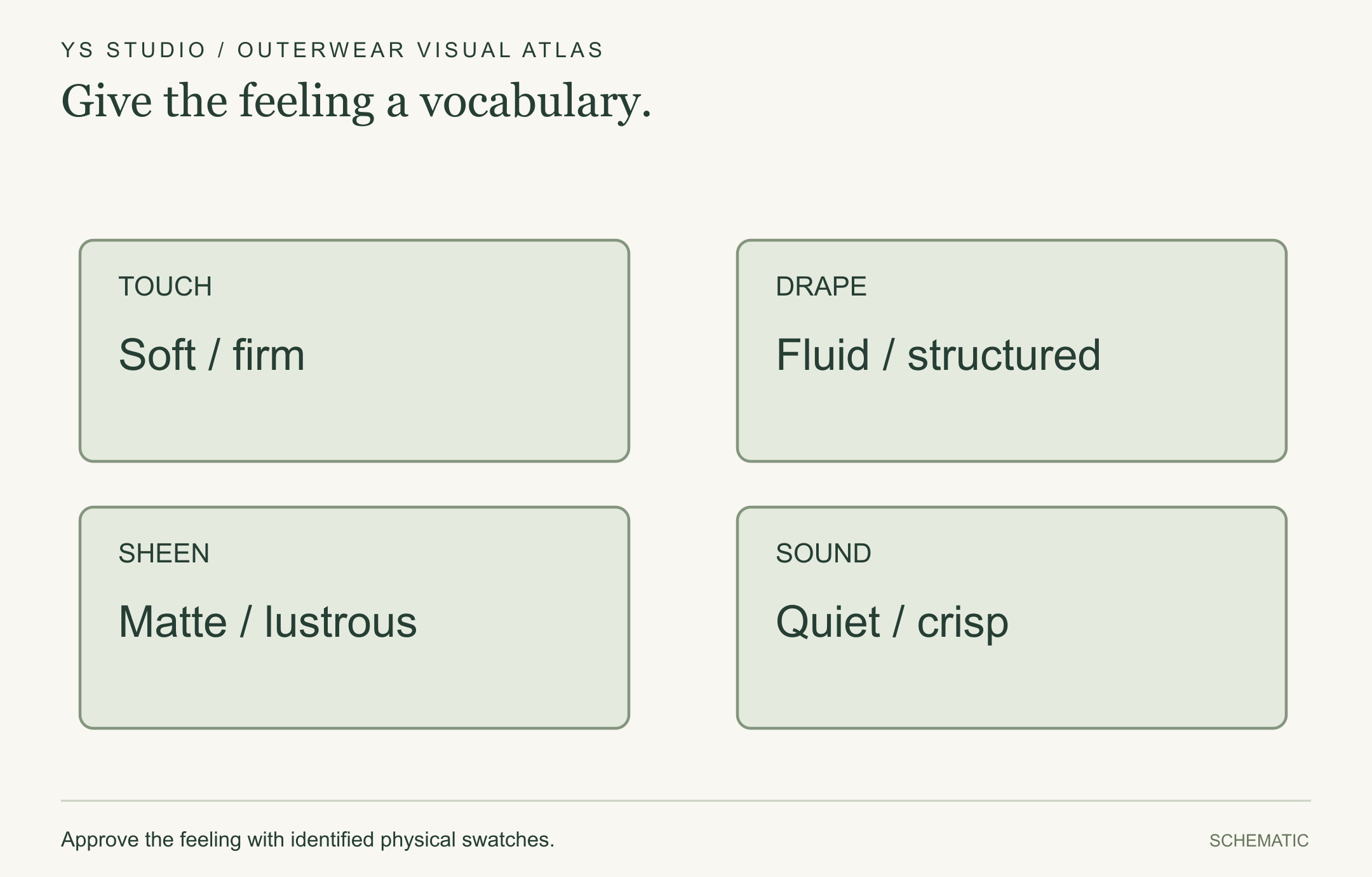
Give the feeling a vocabulary.
Touch, drape, sheen and sound are separate design choices. This vocabulary board is a set of descriptors, with no grade or test score implied.
Approve the feeling with identified physical swatches.
Separate the senses
A shell can look smooth in a photograph yet feel crisp when handled. A soft material can have a shiny surface, and a matte finish can be paired with a structured hand. Treat surface appearance, touch, drape and sound as separate design decisions.
Use references with a purpose
Label each swatch or reference: this one communicates the sheen; this one communicates the body; this one shows the intended drape. A single “premium” reference is too broad to resolve all the choices.
Review a filled panel
Insulation, lining and quilting change the way a shell presents. Compare the real fabric stack, including seams and trims. Review under consistent light and move the sample rather than relying only on a flat photograph.
Make the approval repeatable
Keep a dated, identified hand-and-appearance standard. Record acceptable variation and which material article the standard represents. For bulk, compare incoming materials with the approved reference and the written specification; visual vocabulary supports the discussion but does not replace required testing.
Questions buyers ask
Can a website photograph prove hand feel?
No. Images can show appearance; physical swatches and samples remain important for touch, drape and sound.
Is matte always more premium?
No. The appropriate finish depends on the brand’s design intent.
Sources and further reading
External sources inform the technical explanations above. Standards and test requirements can vary by market; check current documents for your product.
This guide supports early product decisions. Confirm material data, applicable labeling rules and performance claims for the specific product and destination market.