UNDERSTAND IT VISUALLY
Different structures. Product-specific trade-offs.
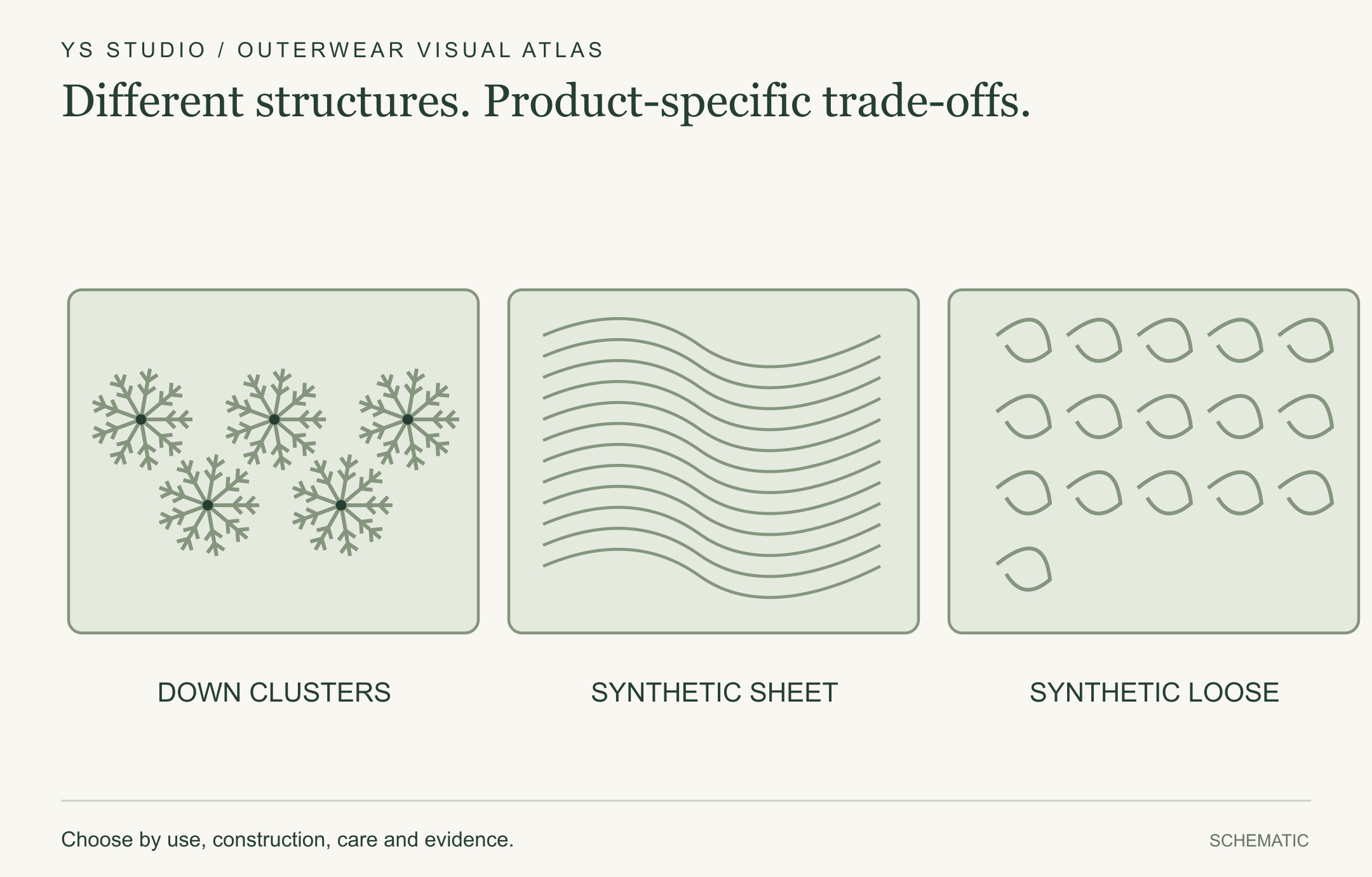
Down clusters, synthetic sheet batting and synthetic loose fill use different structures. Each needs its own material specification.
Choose by use, construction, care and evidence.
Start with the wearer and conditions
Define climate, activity, exposure to rain or perspiration, layering, care access and target price. These use conditions influence how a fill performs and how a garment should be designed.
Compare the actual products
Down fill varies by composition, fill power, fill weight and construction. Synthetic insulation varies by fiber structure, web or batting design, weight and supplier specification. Moisture behavior, drying and recovery are product-specific and need evidence.
Build the test and claim plan
Request current technical data for the selected insulation, agree garment-level tests where performance claims are planned, and evaluate samples after appropriate care or conditioning. Do not transfer a brand’s performance claims to another supplier’s material.
Questions buyers ask
Is synthetic insulation always better in wet weather?
Do not assume this for every product. Verify the specific fill’s performance under relevant moisture and drying tests.
Can I compare synthetic insulation using down fill power?
No. Use metrics appropriate to that insulation and test method.
Sources and further reading
External sources inform the technical explanations above. Standards and test requirements can vary by market; check current documents for your product.
This guide supports early product decisions. Confirm material data, applicable labeling rules and performance claims for the specific product and destination market.