UNDERSTAND IT VISUALLY
Name the layer. Name the fiber.
“Cotton jacket” can refer to the shell or be used loosely for a padded garment. It does not reliably identify the filling fiber.
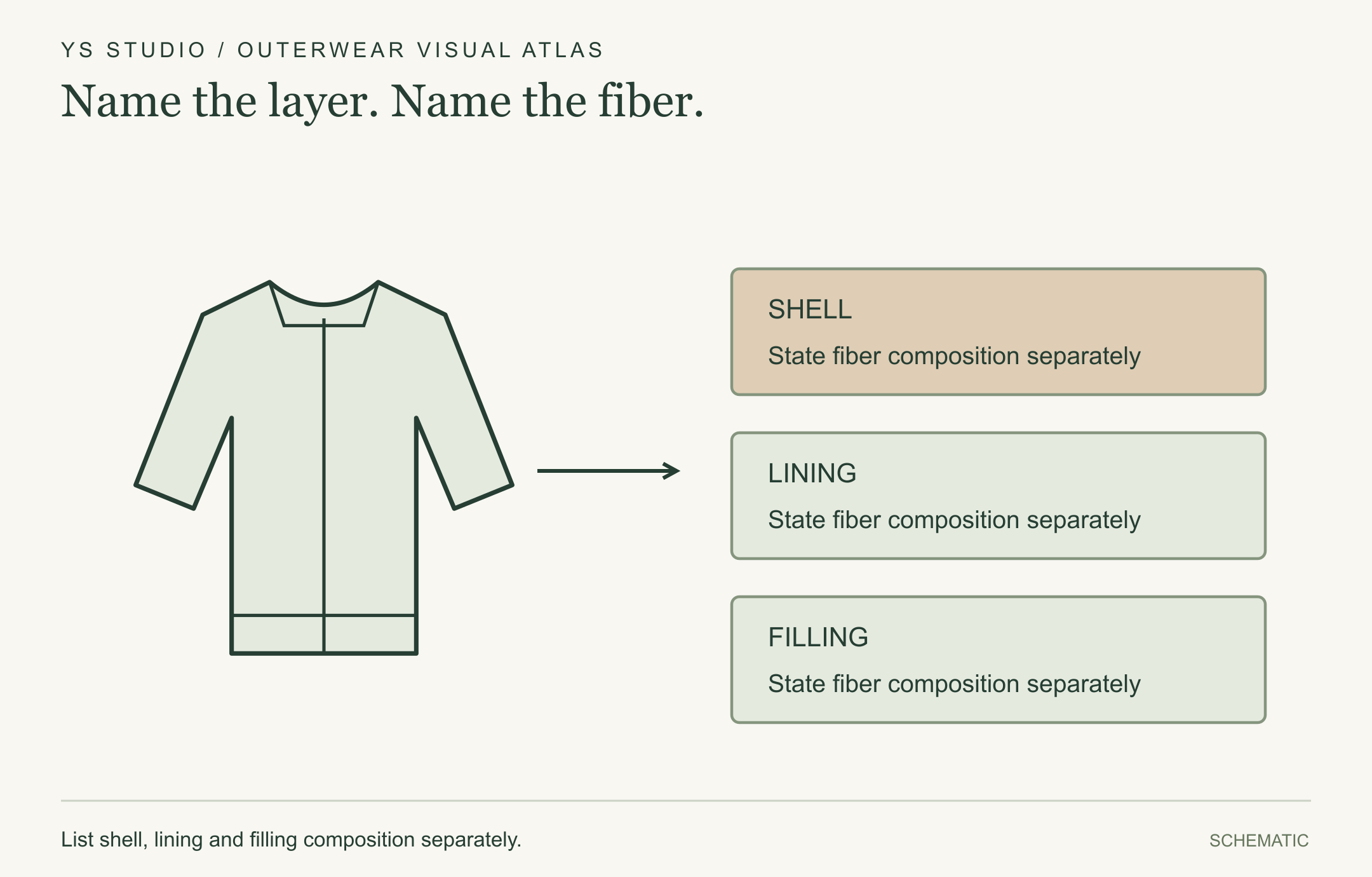
List shell, lining and filling composition separately.
Separate the fabric from the insulation
A cotton face fabric does not mean the jacket has cotton filling. Likewise, “cotton-padded” may be a colloquial regional term for a jacket filled with batting. List material composition for each layer in the bill of materials.
Record the fill form and weight
Specify whether the insulation is sheet batting, loose fiber, blended fill or another construction. Include supplier article, fiber content, target weight or mass per area, thickness where relevant, color, finish and care information.
Approve with a finished sample
Check bulk, drape, warmth intent, seam thickness, quilting, wash behavior and recovery against a representative sample. Make product claims only from evidence for the chosen material and garment.
Questions buyers ask
Does “cotton jacket” tell me the filling composition?
No. Ask for separate fiber composition for shell, lining and filling.
What should a buyer request from a padding supplier?
A current technical data sheet, composition, construction form, target weight/thickness, care conditions and relevant test evidence.
Sources and further reading
External sources inform the technical explanations above. Standards and test requirements can vary by market; check current documents for your product.
This guide supports early product decisions. Confirm material data, applicable labeling rules and performance claims for the specific product and destination market.